
Wet hosing is for equipment that has no tank to fill
Wet hosing means the truck fuels the machine where it sits. It is the tool for excavators, pavers, and other iron that will not drive to a rack or to a tidy bulk tank.
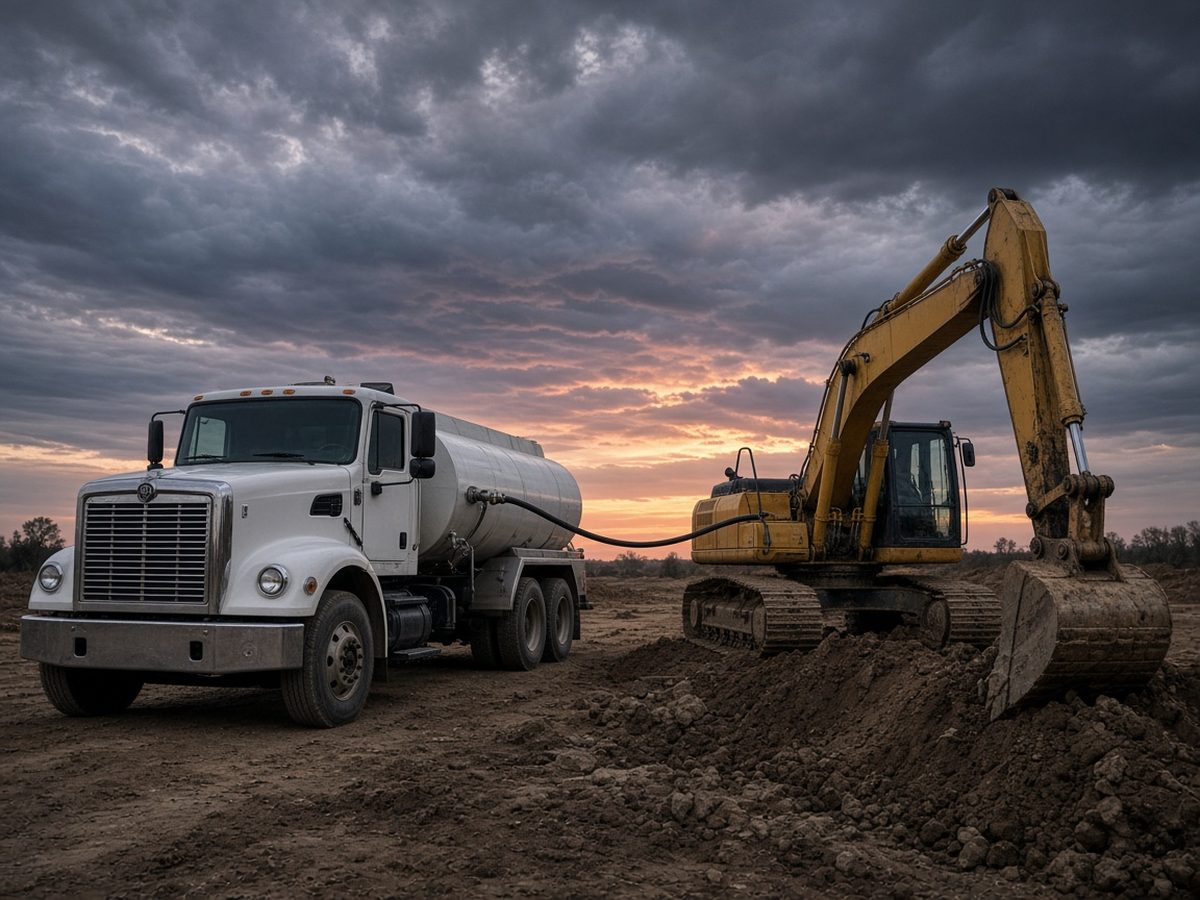
Drop versus hose
A drop fills a tank the truck can hook to. Wet hosing walks the hose to each unit. The gallons per machine are smaller, the time on site is longer, and the minimum still has to make sense for the wagon. Say how many units and a rough gallon total, not “fuel the job.”
Heavy-haul searches reward wet hose and after-hours because those are the capabilities that make a night move or a tight job possible. On an ordinary diesel search, a tank wagon is the capability that adds points. Pick the search that matches the work.
What the driver needs on arrival
A person who knows which machines are ready, a path the hose can reach, and a site that is not an active swing radius. Write the hour and whether the ground is open to a wagon. Overhead lines, soft shoulders, and a locked gate are the usual reasons a yes turns into a missed window.
If the only thing on site is a 1,000-gallon tank at the entrance, you may not need wet hose at all. Say “drop into the job tank” and let them send the truck that fits.
Questions
Does wet hose include the trucks parked on the street?
Ask. Some distributors fuel the iron and not the pickups. Put the units in the notes.
Is wet hose the same as mobile fueling?
Mobile fueling is the broader idea of bringing fuel to the equipment. Wet hose is the method when there is no bulk tank to pump into.